The Quiet fragmentation of what we shared
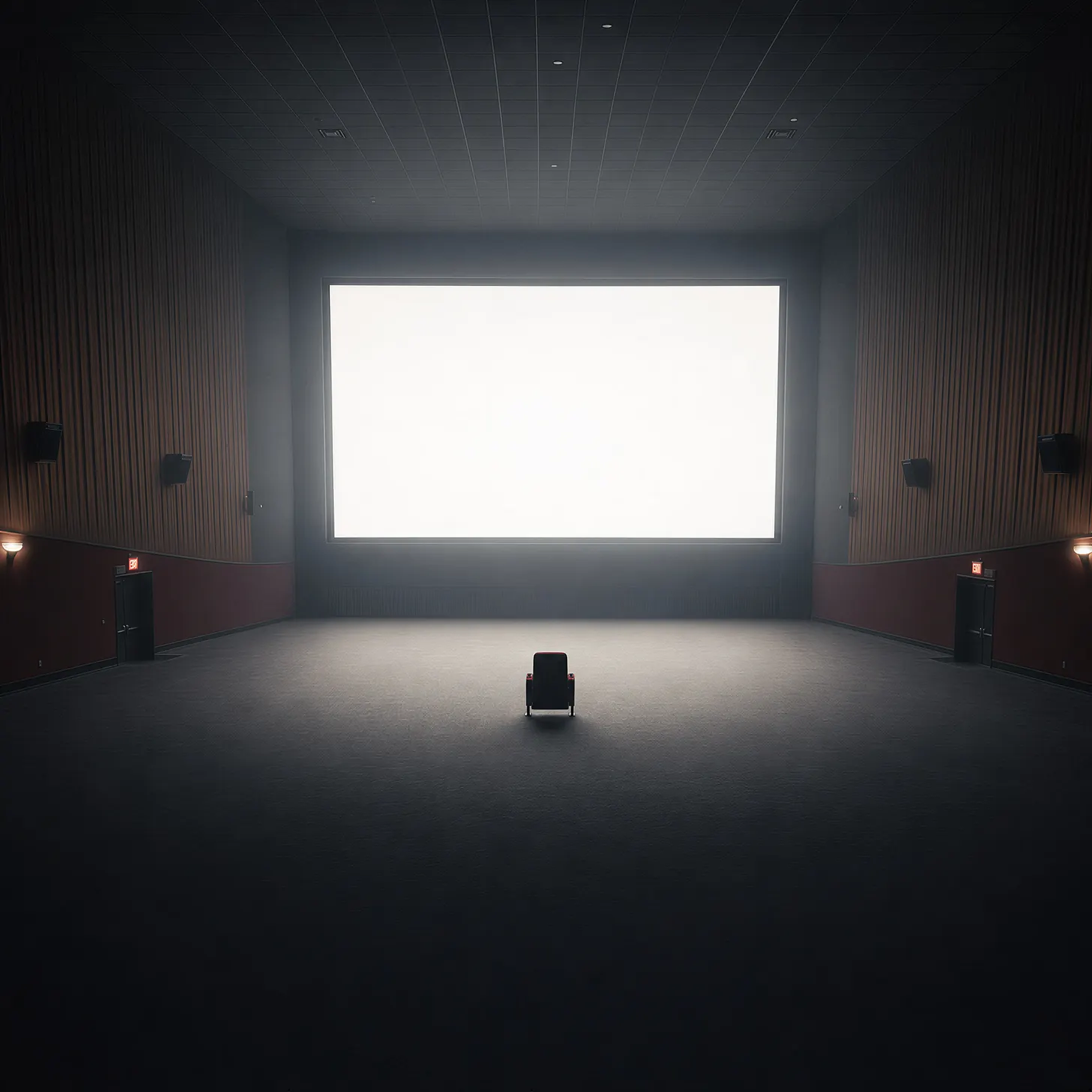
There is a thought I cannot put down lately: one of the things we are not talking about enough is the fragmentation of shared collective experiences.
No shared media. No shared political culture. No shared music culture, not the way Boomers, Gen X and Millennials experienced it (and yes, born in the 80s, I am right in the middle of that one). The common ground is eroding, quietly, beneath our feet.
For most of modern history, culture was shaped by limitation. A finite number of channels, voices and stages meant we were, almost by default, exposed to the same references. You watched what others watched. You listened to what others heard. In that constraint, something powerful emerged: a shared reality.
Today, that constraint is gone. Culture has become infinite, personalized, frictionless. You no longer discover it. You are fed a version of it, continuously refined to match who you are, what you like, what you believe.
At first glance, this feels like a liberation. And in many ways, it is. More voices can exist. More stories can surface. More identities can be expressed without needing to pass through a central filter. Entire worlds of meaning, once invisible, are now fully alive. That is real progress, and it deserves to be named.
But something else is happening at the same time. When culture becomes entirely individual, it risks losing its ability to connect us. It becomes consumption. A private loop. A mirror reflecting us back to ourselves.
And so a paradox emerges. We are more culturally rich than ever, yet sometimes less culturally aligned.
I noticed it again this week, watching the Michael (Jackson) film, but the movie is not the point. What struck me was something else: he was an artist we all knew. Not because we all loved him, not because we agreed on him, but because his existence was simply part of the air. A reference any stranger would catch. He functioned as common ground, because everyone recognized. That kind of universal anchor is rarer now.
Instead, we are living inside a constellation of micro cultures. Vibrant, creative, meaningful, but often disconnected from one another. We curate our own feeds, our own references, our own aesthetics, eventually our own personal brand. We are moving toward a world of perfectly tailored cultures of one.
And with AI, we are about to cross another threshold. Anyone can now generate their own film, their own music, their own visual universe, their own mythology. The tools that once required studios, crews, decades of craft are collapsing into a prompt. I am inside this shift every day, so I say this without nostalgia and without panic: we are no longer just curating our own world, we are starting to author it, alone.
And that is the part I keep thinking about. A culture made by one person, for one person, never has to meet anyone halfway. It never has to be understood, argued with, or shared. It just has to satisfy its maker.
I do not have a clean answer to this. I notice the temptation, when writing about something that worries you, to land softly. To find the silver lining, the optimistic pivot, the redemptive turn. I do not want to do that here, because I am not sure it is honest.
What I see is harder to resolve. We have gained an immense range of voices, and we may have lost the room they all used to gather in. We have gained the freedom to be perfectly ourselves, and we may have lost the friction that used to push us toward each other. These are not small trade-offs, and they will not be undone by good intentions.
But sitting with that discomfort is, I think, where the actual work begins. Not in pretending the fragmentation is secretly a gift, but in asking what we are now responsible for building, knowing the old container is gone.
Maybe the future of culture is not a return to a single shared narrative. Maybe it is the slow, deliberate practice of creating bridges between many. Moments of convergence rather than permanent uniformity. Shared experiences that are intentional, not imposed. Common ground that is built, not assumed.
These moments are more fragile, more fleeting, but also more dynamic. They do not erase differences. They connect them. And they will not happen on their own. They have to be made.
Because if culture is what makes a society, then the future of society may depend on our ability to design moments where “I” becomes “we” again, even if only for a moment.